
Ideas and updates
News and Updates
 Read story
News and updates
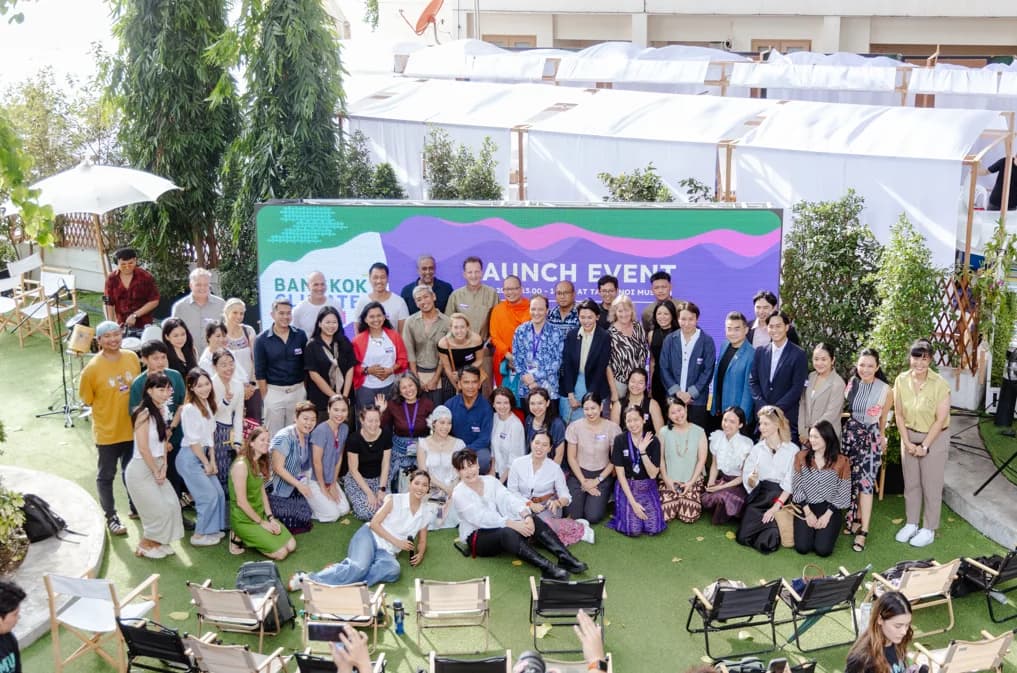
Bangkok Climate Action Week 2026 Launch Event at Talat Noi Museum Builds Momentum Towards Main Festival in October
BKKCAW connects actors across ten thematic clusters, from energy and food to art and culture, enabling scalable action toward a regenerative future
Bangkok, 7 May 2026 – Bangkok Climate Action Week (BKKCAW) 2026 was formally launched today at Talat Noi Museum, setting the stage for the main festival scheduled from 3-11 October 2026.
Organized by Just Transitions Incubator (JUTI) in partnership with the Bangkok Metropolitan Administration (BMA) and a diverse set of partners (Greenery, MMU, Love Frankie, TQPR, III Muses) the launch marks the public start of a year-round event culminating in Bangkok Climate Action Week.
It was attended by leaders from government, business, civil society, academia, media, influencers and public figures, who outlined the festival’s structure, goals and key objectives. Speakers addressed the need for a new economic model that prioritizes human and ecological well-being over traditional GDP measures and metrics.
Chadchart Sittipunt, BMA Governor, spoke on the capital city’s readiness for this transition. “Bangkok stands poised to integrate 'New Economy and New Climate' principles into its urban planning and public services in a cohesive manner. By advancing green infrastructure and helping local communities be resilient and adaptable to change, we are committed to co-creating a sustainable future where every resident plays a role in determining the city's climate direction together.”
Strategic Timing and Objectives
Taking place immediately before the World Bank and IMF Annual Meetings in Bangkok (12-18 October 2026), BKKCAW 2026 offers a strategic opportunity to showcase Asian leadership and amplify Asia's voice in the global climate and economic conversations. The event endeavors to address the root causes of climate challenges by rethinking economic systems that drive inequality and environmental degradation.
Its four objectives include activating citizens as climate agents, connecting regional solutions, demonstrating viable New Economy examples, and crafting empowering narratives centered on the concept of “Rao Likit – New Economy, New Climate”.
The theme - which translates as “We Destine” a new economy for a new climate, was announced in March – and aligns with BKKCAW’s ethos of addressing root causes rather than symptoms, recognizing an economy that drives development and climate outcomes.
These goals materialize through ten clusters — Energy, Food, Nature, Health & Well-being, City & Mobility, Education, Hospitality & Tourism, Community, Economy, Art & Culture — and six cross-cutting issues: Policy, Law & Governance; Area-based Collaboration; Economy & Finance; Social Change Mechanisms; Behavior Change; Regional Cooperation. Cluster leads and representatives from Nature Plearn Club, makesense Asia, LUKKID and Common Youth, provided previews of October programming. Highlights to look forward to at BKKCAW 2026 include the Climate Action Football Cup, Green Jobs Fair and Sustainable Fashion Week featuring designers from around the region. The South-South Collective for Climate, in partnership with Climate Collective Foundation and others, will launch BKK Climate Data Week and Climate Launch for AI: Southeast Edition, an early-stage Climate and AI startup accelerator.
On-Site Engagement
The event included a “The Pulse of the Green Economy” performance portraying Bangkok’s trees and green spaces as an economic advantage contributing to clean air and tourism value. Partner and activity booths offered workshops such as upcycled leather keychain making by Talat Noi Community and herbal inhaler production by Poonbumphen Community. Networking continued until 18:00 with plant-based catering that focused on zero waste.
A Vision Panel included Dr Buntoon Srethasirote (government), Khemupsorn Sirisukha (private sector), Dr Boonwara Sumano Chenphuengpawn (CSO), and Korb Limsuwan from Chulalongkorn University’s Zero Waste initiative and discussed the behind-the-scenes co-creation of BKKCAW 2026. While a recap of BKKCAW 2025 also featured speakers from GYBN Thailand, Wat Saket Ratchawora Mahawihan, and neobaannok.
Road to October
The decentralized platform invites program partners to host sessions within clusters, resource contributions from venues and funders, and participation from speakers and communities. Since March, stakeholder sessions have aligned early collaborators; today’s launch equips decision makers with the narrative for ongoing engagement.
Leo Horn-Phathanothai, Founder of Just Transitions Incubator and Co-Chair of the BKKCAW Steering Committee, noted that a vision of reshaping economic systems through existing economic models is essential to drive meaningful action today.
“Shaping a new economy is not a matter we should leave to economists, it has to do with choices that each can make, it is not an academic or theoretical issue. It is about practical realities and real-world choices we all have about which economy to participate in. This is not something for the distant future, but about choices we can make in the here and now.”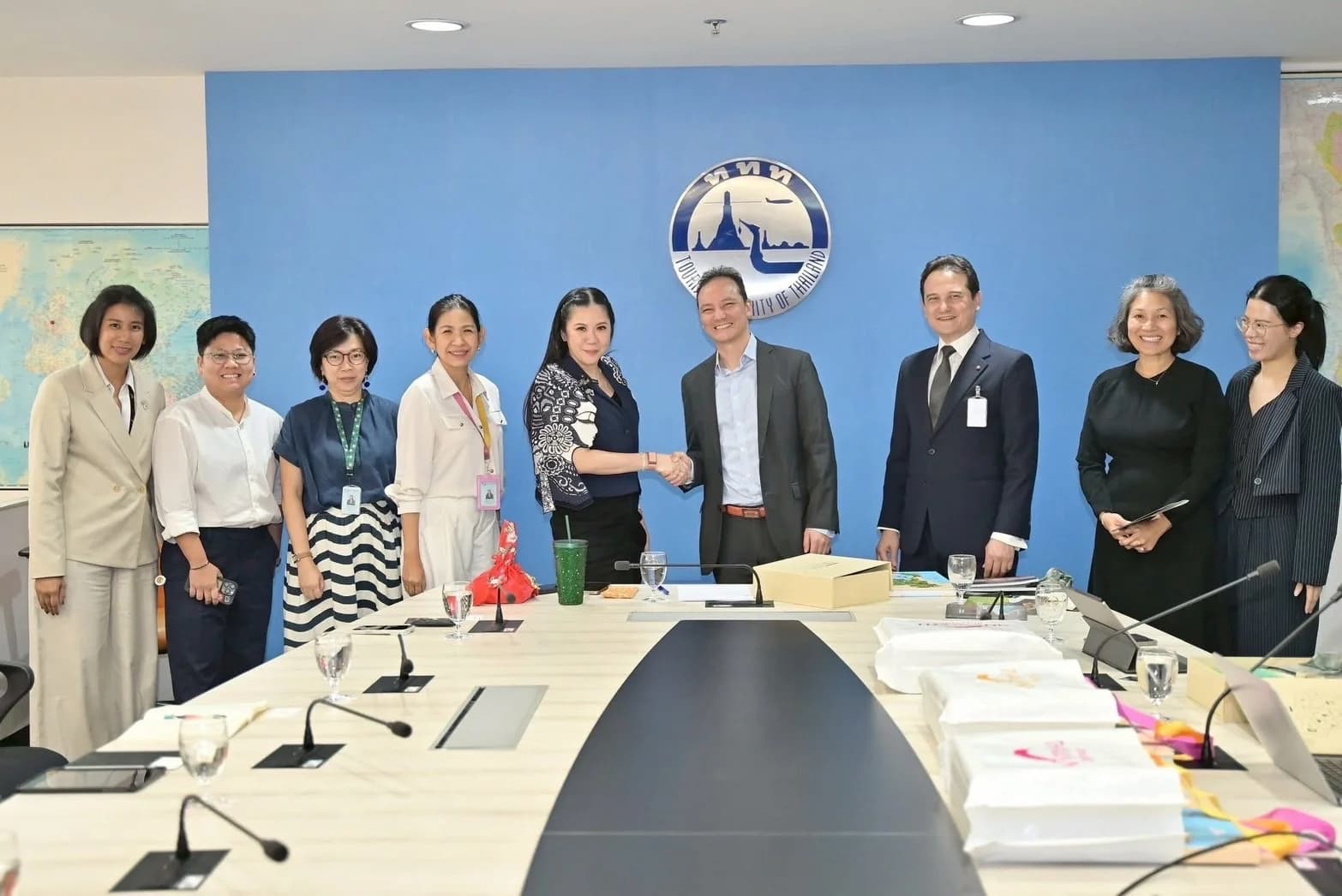 Read story
News and updates
Bangkok Climate Action Week 2026 and TAT Partner to Advance Thailand’s Sustainable Tourism Vision
The Partnership supports Thailand’s value-based and sustainable tourism vision while spotlighting climate innovation and community-led travel experiences for regional and global audiences
Bangkok, 11 August 2026 – Bangkok Climate Action Week (BKKCAW) 2026 announces the support of the Tourism Authority of Thailand (TAT), strengthening efforts to position Thailand as a destination where sustainability and climate action are not buzzwords but core drivers of value-based tourism, generating opportunities, jobs and nature conservation outcomes. The collaboration reinforces BKKCAW’s mission to accelerate climate solutions across Southeast Asia while highlighting Thailand’s growing leadership in value-based and sustainable tourism.
Taking place from 3-11 October 2026, BKKCAW 2026 will bring together leaders from government, business, academia, civil society, youth and local communities through a city-wide programme of events designed to catalyze action on climate and sustainability challenges. With TAT’s support, the partnership will further elevate dialogue around sustainable tourism and Thailand’s role as a destination for meaningful, responsible and purpose-driven travel.
As global tourism evolves, travelers are increasingly seeking authentic experiences that contribute positively to local communities and the environment. This shift aligns with Thailand’s ambition to bolster its position as a beacon for value-driven and sustainable tourism under the Amazing Thailand framework, with an emphasis on safety, cleanliness, fairness and sustainability.
The collaboration also reflects the government’s broader vision to drive quality tourism growth through the Amazing 5 Economy strategy, which focuses on the Life Economy, Sub-Culture Economy, Night Economy, Circular Economy and Platform Economy. By convening innovators, policymakers, businesses and communities, BKKCAW provides a platform to translate these principles into practical solutions that create value for people, places and the planet.
BKKCAW is a year-round platform for action, learning and regional collaboration that goes beyond individual or isolated actions to nurturing broad-based movements driving sector-wide shifts. The event week is positioned as a key catalyst and convening moment to galvanize the public, focus attention, convene diverse actors, forge shared agendas, and catalyze collaboration among like-minded partners.
Ms. Thapanee Kiatphaibool, Governor of the Tourism Authority of Thailand, said “Tourism generates significant economic value, but without responsible management it can place pressure on natural resources, local communities and the very experiences that attract visitors. That is why TAT is committed to advancing sustainable tourism as the foundation for Thailand’s long-term growth. Through our collaboration with partners across sectors at Bangkok Climate Action Week 2026, we aim to strengthen Thailand’s position as a sustainable tourism destination, while supporting quality economic growth under the Amazing 5 Economy strategy. By connecting climate innovation, community participation and natural resource conservation, we can create meaningful tourism experiences, deliver lasting benefits to communities and businesses, and ensure that future generations continue to share in Thailand’s unique natural and cultural wealth.”
"Bangkok’s vibrant spirit has always drawn the world in, but our future depends on how sustainably we grow... Bangkok Climate Action Week is a pivotal moment to unite our tourism legacy with bold climate leadership, building a resilient, green destination for generations to come," Mr. Weerasak Kowsurat, Advisor, Bangkok Climate Action Week Steering Committee and Former Minister of Tourism and Sport of Thailand.
Taking place immediately before the World Bank Group and IMF Annual Meetings in Bangkok, BKKCAW 2026 presents a timely platform to showcase Thai and Southeast Asian leadership on climate action, sustainable development and economic transformation. The festival aims to activate citizens, connect solutions, demonstrate what works and shape empowering narratives that inspire collective action across the region. Read story
News and updates
Bangkok and the Next Chapter of Climate Action in Asia
This article is co-authored by Deepali Khanna, Senior Vice President and Head of Asia, The Rockefeller Foundation And Leo Horn-Phathanothai, Founder and Convenor, Bangkok Climate Action Week
Earlier this year, Bangkok’s heat index entered the “extreme danger” zone, with “feels like”
temperature exceeding 52 degrees Celsius.
Asia is on the front line of the climate crisis. The region is warming faster than the global
average, and extreme heat, floods, and droughts are already harming lives, livelihoods, and
hard-won development gains. But leaders and innovators across Asia are confronting the
crisis with ambitious solutions rooted in cooperation across borders, sectors, and political
divides. This collaborative spirit will be on display at Bangkok Climate Action Week, and can
be a model for the world as it faces the disruptions of the 21st century.
Bangkok Climate Action Week, taking place October 3 to 11, brings together actors from
across society - citizens, communities, creatives, businesses, researchers, policymakers,
and civil society - and fosters new forms of exchange and collaboration among them. The
Rockefeller Foundation has supported Bangkok Climate Action Week since its inception,
recognizing early on the singular role this city can play in bringing the region’s climate
leaders together.
Bangkok Climate Action Week, taking place October 3 to 11, brings together actors from
across society - citizens, communities, creatives, businesses, researchers, policymakers,
and civil society - and fosters new forms of exchange and collaboration among them. The
Rockefeller Foundation has supported Bangkok Climate Action Week since its inception,
recognizing early on the singular role this city can play in bringing the region's climate
leaders together.
Read the full article: https://www.bangkokpost.com/opinion/opinion/3329943/climate-turmoil-in-asia-hits-home?trk=public_post_comment-text Read story
News and updates
An Open Letter to the Delegates Attending the Annual Meetings of the World Bank Group and the International Monetary Fund
To: Finance Ministers, Central Bank Governors, Executive Directors, and Leadership of the World Bank Group and the International Monetary Fund
Subject: A Call for a New Economic Paradigm in Southeast Asia
Welcome to Bangkok. You meet at a moment of profound choice and possibility for Southeast Asia and the world. We can persist with an extractive economic paradigm and surrender to the mounting chaos and pain of a global unraveling already in motion; or we can embrace a great turning that will set us on a path to recovery, resilience, and shared prosperity for generations to come. There is only one moral choice, and it is also the economic one, as we know business as usual will entail unfathomable costs. We choose an economy that nourishes and sustains people and the planet over one that depletes them.
Over the past week, thousands of people gathered here for Bangkok Climate Action Week, the region’s largest gathering of its kind, to explore and chart concrete pathways to a better economic future. Across more than 330 events involving over 200 organizations from across Southeast Asia, a clear signal emerges: we are already in the turning. The challenge is no longer whether viable alternative development models exist, but how to create the conditions that allow them to thrive. We welcome your partnership in this.
We share your aspiration to deliver shared prosperity on a liveable planet. Fulfilling this vision demands more than incremental adjustments to prevailing systems; it requires a rapid evolution in our economic logic and decision-making. This transformation must be grounded in climate and ecological justice, recognizing the intrinsic value of nature, the interdependence of all life, and the reality of ecological limits.
We invite you to envision a network of economies where all people may thrive with reliable access to clean energy, healthy soil, clean water, secure housing, and nutritious food, delivered in symbiosis with Earth systems. We see a future economy made structurally resilient by centering human care - unlocking the agency of women and youth - and safeguarding our rich natural heritage as the bedrock of long-term security.
We must confront this historic juncture with a candid and compassionate reckoning of the harm caused by our dominant economic model. The interconnected crises of inequality, climate breakdown, biodiversity loss, and systemic pollution share a common root: a global financial system that prioritizes private wealth accumulation for a select few over public goods and environmental commons. These failures bring us to the brink of irreversible ecological and social tipping points. They leave businesses, public assets and sovereign investment portfolios dangerously exposed to shocks and the ticking timebomb of stranded assets.
The good news is that we are already writing new scripts for our economic future with what we have today. Our cultural heritage preserves time-tested, community-led practices like integrated rice-fish systems, which are being revitalized across Southeast Asia to withstand climate and market shocks. Furthermore, Southeast Asia holds over a quarter of the global biological treasury. Protecting and regenerating our natural ecosystems is an economic prerequisite that secures foundational stability and resilient livelihoods.
Across the region, bioeconomy initiatives and programs show that forests, agroforestry systems, coastal resources, and biodiversity are already supporting economic development, job creation, climate resilience, and shared prosperity. More than isolated pilots, we see an emerging pattern and hard evidence of wellbeing-oriented bioeconomies already working across the region.
Our core premise is straightforward: our next economic leap will not come from extracting more from nature and people, but from investing in them, enhancing their capacity to regenerate and deliver more equitably shared value. We welcome your partnership in this and put to you the following 10 pillars for action and collaboration:
1. Measure What Matters
Embed the UN’s Beyond GDP metrics into credit ratings, loan assessments, and policy design, expanding on the World Bank’s natural capital accounting.
2. Align financing with internationally agreed climate and biodiversity goals
Align financing with the Paris Agreement and the Kunming-Montreal Global Biodiversity Framework. End harmful fossil fuel and agricultural subsidies and ensure carbon credits do not substitute for direct emissions reductions.
3. Finance just energy and food transitions
Prioritize investment in grids as the backbone of the transition and support small-scale distributed clean energy owned by communities. Shift from harmful industrial agriculture towards regenerative food systems that support food sovereignty and local food cultures, sustain farmer livelihoods, healthy ecosystems, equitable access to nutritious food, and balanced diets.
4. Pivot from post-disaster reconstruction to pre-disaster prevention
With climate impacts more predictable than ever, the World Bank can shift from reactive disaster response and management to proactively embedding protection into the core of its lending. Likewise, the IMF can use this data to integrate climate risks and preventive planning into IMF macroeconomic surveillance.
5. Address debt burdens and protect public spending
Support debt reduction and restructuring to increase fiscal space. Avoid conditions that cut social and environmental spending or pressure countries to sell natural resources. Apply the polluter-pays principle. Debt-for-nature swaps must not transfer control over natural resources to creditors.
6. Facilitate direct access to nature-care financing
Provide long-term finance directly to Indigenous Peoples, local communities, and civil society. Make resources readily accessible to ultra micro, micro, small and medium-sized regenerative producers over the long-term, such as flexible and patient capital, resulting in de-risked equitable and transparent investment that is outcome-oriented.
7. Uphold rights and equitable benefit-sharing
Ensure the use of traditional knowledge, genetic, and biological resources respects community and nature rights and shares revenues and technology fairly. Recognize collective rights, customary tenure, and cultural heritage.
8. Address Loss and Damage
Provide new grant funding proportional to historical responsibility for climate impacts, holding responsible institutions accountable.
9 Strengthen public participation, accountability and governance
Open policymaking to local and marginal voices, disclose funding flows, establish independent grievance mechanisms. Ensure effective engagement of Indigenous Peoples, local communities, women, youth, and vulnerable groups in decisions concerning them. Strengthen transparency and accountability of public institutions ensuring access to information and to justice.
10. Evolve new models of development partnership
Promote regional and south-south green economic transition partnerships combining trade, aid, investment, technical cooperation, technology transfer and science and innovation to build shared economic security.
The World Bank can advance these proposals through its investments, grants, and project accountability. The IMF can align debt and fiscal policies so countries have the resources to implement them. Both should uphold a shared principle: those who care for nature must have rights and resources; those who cause harm must take responsibility; and people must have the power to shape their future. In areas where there is already movement we encourage you to go further, faster.
We look forward to working with you to explore practical pathways to accelerate the transition already underway across the region.
Wishing you a successful meeting.
The Bangkok Climate Action Week Community
www.bangkokclimateactionweek.org